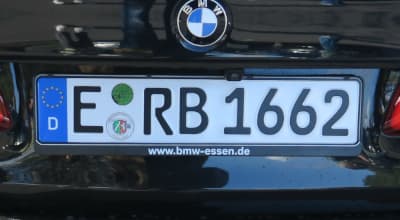
Germany exports more used cars than any other country in Europe. That makes it a great source — and a magnet for cross-border fraud. Here is how to buy safely.
Why German used cars are popular — and why that creates risk
Germany is Europe's largest used-car market. Platforms like Mobile.de and AutoScout24 list millions of vehicles, many priced below equivalent local stock in Eastern and Northern Europe. Latvian, Polish, Romanian and Baltic buyers regularly import from Germany — drawn by availability, brand variety and competitive pricing.
That same volume creates opportunity for fraud. Cars with accident damage, odometer rollback or total-loss history are routinely exported east before local databases catch up. A vehicle that passed through a German auction with a known damage record can re-appear weeks later with clean local papers and no visible history.
Five checks before you buy from Germany
- Run a German-market VIN history check. A VIN check that covers German insurance databases, TÜV and DEKRA test records, and German auction records will surface damage and mileage anomalies that a destination-country check will miss entirely. Always check before viewing — not after.
- Request the complete service history. German service books (Serviceheft) are typically well-maintained. Ask for photos of every stamp page before agreeing to travel. Gaps between services at even intervals, or a book that looks too clean for the car's age, are warning signs worth investigating.
- Verify the Zulassungsbescheinigung Teil I and Teil II. The German registration document comes in two parts. Teil I travels with the vehicle; Teil II is the ownership certificate held separately. A seller who cannot produce Teil II, or who only recently registered the car in their name, may not have clear title to sell it.
- Check the Hauptuntersuchung (HU) mileage. Germany's biennial roadworthiness test (HU) records the mileage at time of inspection. Cross-reference the HU sticker date and mileage against the seller's claimed history. A recently-passed HU at a mileage far below what the history implies is an immediate red flag for rollback.
- Factor in all import costs before comparing prices. Budget for transport or travel, local registration fees, import duties for non-EU buyers, a pre-purchase independent inspection, and the VIN history check itself. A car that appears cheaper than local stock can quickly become more expensive once all costs are included.
Check German records before you travel
AutoProVin's reports pull from European databases including German market records. Enter the VIN of any vehicle listed on Mobile.de or AutoScout24 and check its full history — accident records, mileage timeline and total-loss status — before you book a flight or arrange transport.
Check German car history